TIG-ARGON Welder Course
As I mentioned in the previous article, today we will discuss the TIG Welder, also known as an Argon Welder, and I'll start by clarifying that TIG stands for: Tungsten Inert Gas.
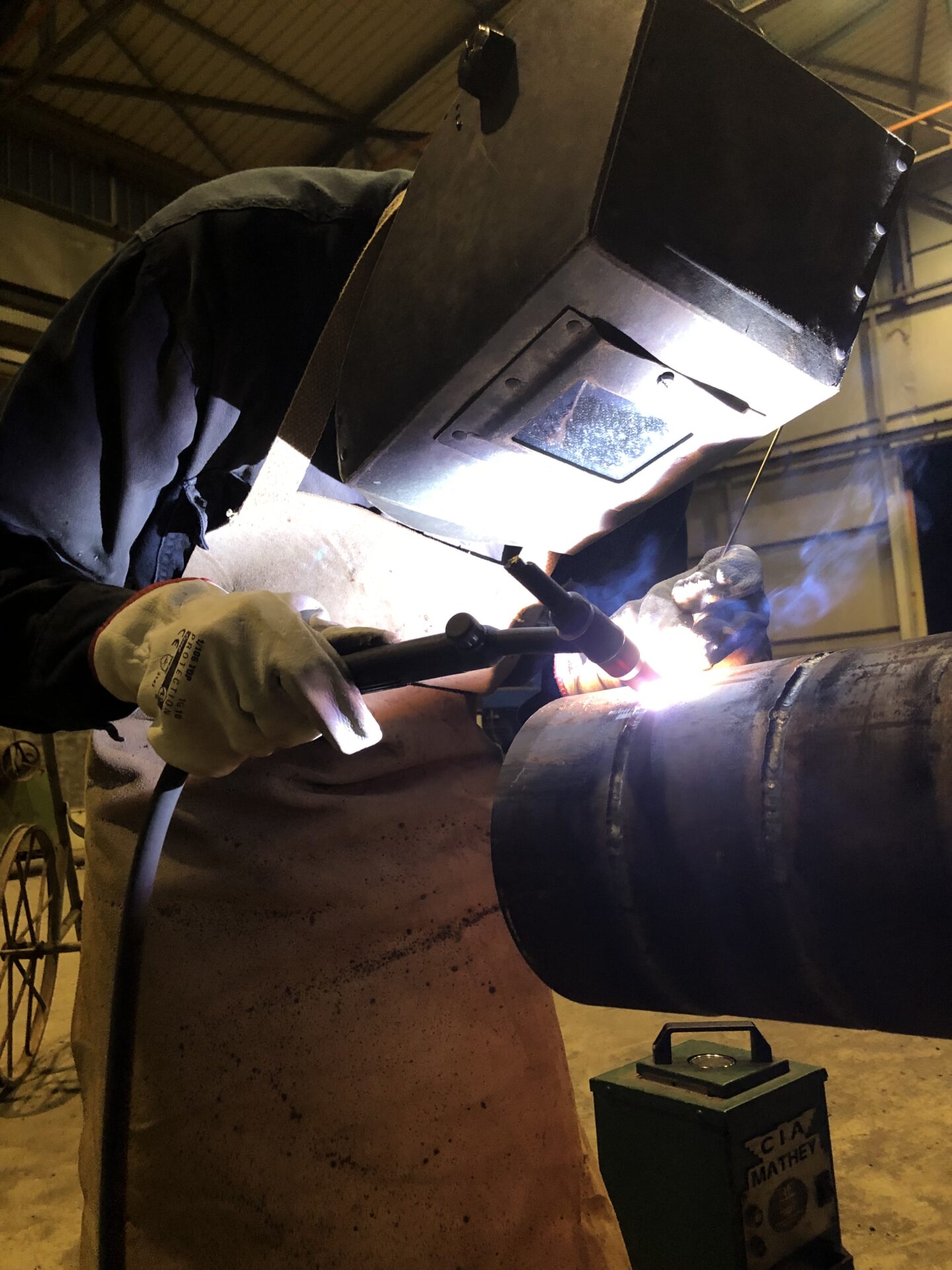
In this type of welding, the welder uses a torch where a tungsten (non-consumable electrode) is inserted to serve as a conductor. Inside the torch, Argon gas passes through a diffuser, which will protect the weld pool. This is why a TIG welder is also called an Argon Welder.
The TIG welder is a highly specialized welding professional. Many aspire to become Argon Welders because they are the most in-demand and best-paid welders in the job market. Companies, if they don't know the welder, will ask if they possess the TIG and Electrode Welding Certificate “EN ISO 9606-1 141/111” before hiring them. This certificate covers two different welding techniques: the first is called 'TIG root pass' and the second is 'filling and finishing with covered electrode clamp.' The latter is the procedure I explained in the previous article on electrode welding.
You will therefore understand that obtaining the TIG and Electrode Certificate is not easy, as it requires mastering both welding types.
Almost all welders aspire to become 'Argon Welders,' but this is only possible through years of experience or by attending a genuine, comprehensive Welding Course with extensive practical hours. In my experience, a TIG and Electrode course with fewer than 100 hours of pure welding practice is completely ineffective, as it doesn't provide enough time to acquire the manual skills and experience that companies will later require.
At our Welding School, we offer the Electrode Welder Course, the TIG Welder Course, and the TIG and Electrode Welder Course.
Often, our students begin with the Electrode Welding Course (Proc. 111). Once they pass the exam and receive their certificate, they gain work experience as electrode welders. Later, they decide to complete their training path and enroll in the TIG Welder course to obtain an additional certificate.
Alternatively, students sometimes opt for the combined TIG and Electrode course directly, which is a comprehensive course (Proc. 141/111). It lasts one month, and at the end of the course, students take the TIG and Electrode Welding Certificate Exam. The exam involves welding a two-inch joint positioned at 45° in 11.8 mm thick carbon steel. The welded piece will be X-rayed, and if no welding defects are found, we will issue you an International Welding Certificate valid for diameters from 1″ to infinite and for pipe thicknesses from 3 mm to 23 mm.
Mimmo Welding Inspector Senior