Electrode Welder Course
Our Welding School's Electric Welder Course
Article Author: Mimmo, Senior Welding Inspector, Metalworking Specialist.
The question most frequently asked by those interested in our courses is:
Which welding course should I choose?
At our welding school, we teach 4 types of welding:
1) Shielded Metal Arc Welding (SMAW) / Electric Welder,
2) Wire Welding (MIG/MAG),
3) TIG Welding (GTAW) / Argon Welder,
4) Submerged Arc Welding (SAW),
Today, I will discuss the first course, Electric Welder, also known as Electrode Welder Course (with code SMAW or n°111).
This type of welding is one of the most widespread globally and allows for welding almost all types of ferrous materials.
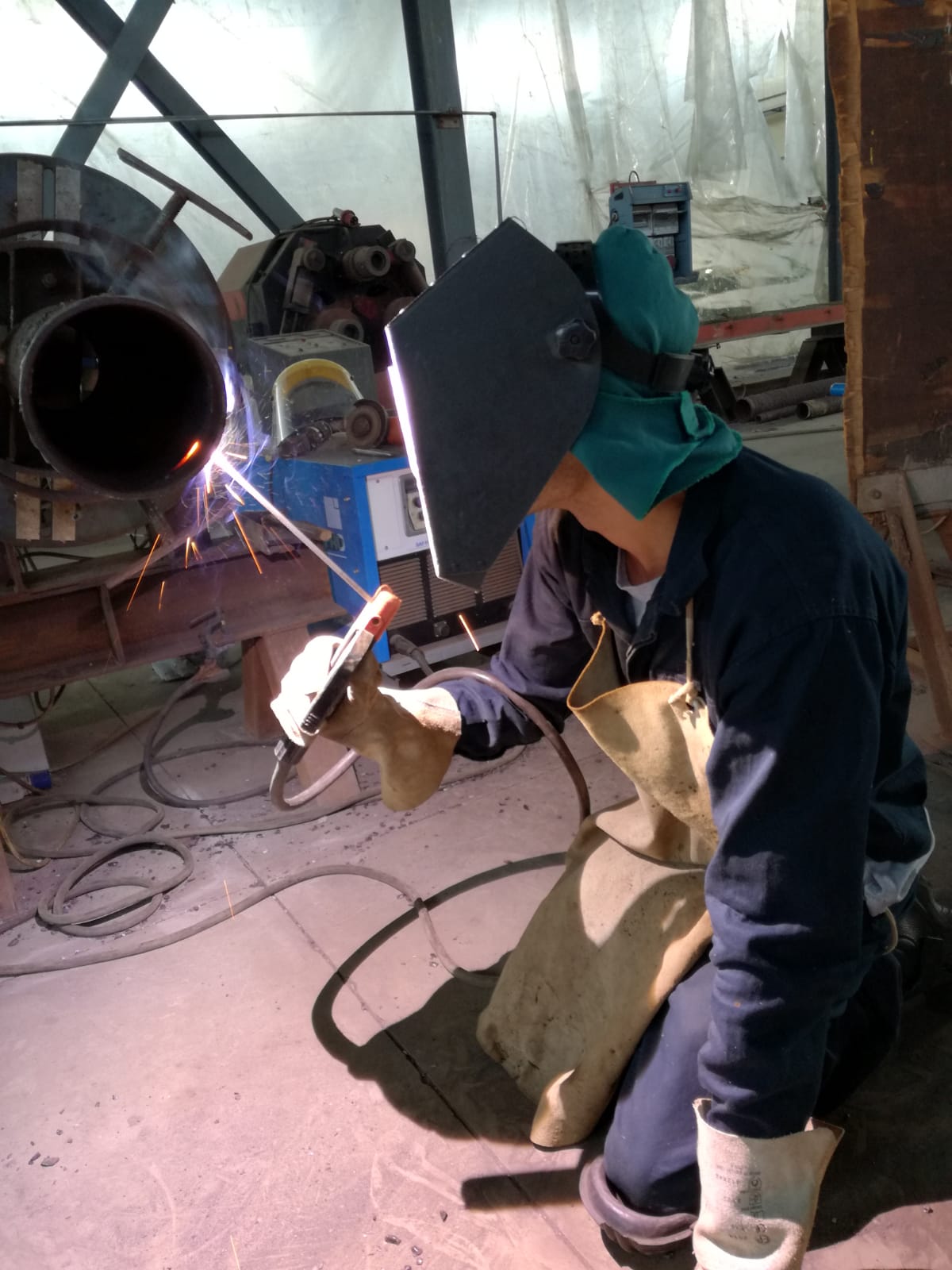
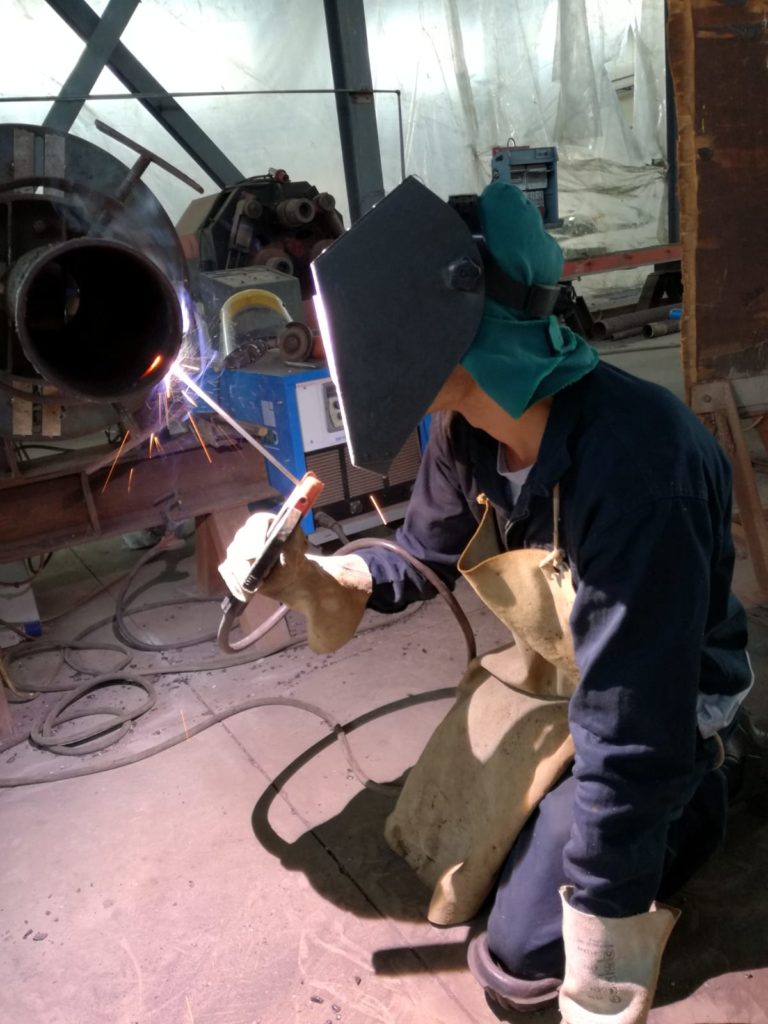
It is a welding process that occurs via an electric arc, leading to the fusion of a coated electrode and the ferrous material.
Due to its manual nature, the electrode welding process can be used interchangeably on-site in construction/plant environments and in workshops.
Electrode welding is the fundamental basis of all welding processes. Our welding course enables you to understand and teaches you how to weld a full penetration joint with back gouging.
For those unfamiliar with the industry, a joint is the connection area between two pieces that need to be welded. Joints can have various characteristics and shapes, but in all cases, they must be properly inspected and prepared before welding. However, don't worry; we will teach you everything during the course, as we always start from scratch.
The joint to be welded is then positioned and secured vertically on the workbench, subsequently welded for penetration, filling, and finishing, and then back-gouged from the opposite side.
If an error is detected during welding, it is corrected by creating a deep groove using an angle grinder of at least 3-4 mm, thereby removing the faulty weld section and re-welding with greater care. Typically, the root pass is where most defects and impurities of the weld pool are located.
The electrode welding certification requires a welding test/examination, followed by destructive testing of the specimen and radiography. Only upon successful completion of the test will our recognized International Certifying Body partner issue your welding certificate, which will be valid worldwide.
The electrode welding certificate is very comprehensive and certifies you to weld sheet metal from half the thickness of the test/specimen/examination up to double that thickness. Therefore, if you weld a 12 mm thick joint during the certification exam, you will be certified for thicknesses ranging from 6 to 24 mm. You will be certified to perform welds on all types of sheet metal of the aforementioned thickness in carbon steel, on profiles such as IPE, HEA, HEB, UPN, etc., and also on pipes or cylindrical bodies over 500 mm, extending indefinitely to include tanks, etc.
Obtaining this welding certificate is by no means simple or guaranteed; recommendations are not applicable. It will be demanding, requiring many hours of commitment and dedication throughout our course.
The electric welder is a highly sought-after skilled worker (electric welder) in the job market. However, today, many companies, depending on their sector, also require proficiency in TIG/Argon welding (a course I will explain in the next article).
My advice: If you live in an area with numerous companies requiring plant maintenance, specifically plant shutdowns or refinery turnarounds, electrode and TIG welding processes are undoubtedly the most utilized and thus highly demanded by companies.
In the next article, I will discuss the TIG (argon) process, which is the most comprehensive of our courses.
For more information on our electrode welding course, click here to visit our website page.
Article Author: Mimmo, Senior Welding Inspector, Metalworking Specialist.