Come Ottenere un Patentino Internazionale di Saldatura?

Come Ottenere un Patentino Internazionale di Saldatura?

Nel dinamico mondo della metallurgia e della fabbricazione, possedere un certificato internazionale di saldatura non è solo un vantaggio; è spesso una necessità.

Per i saldatori ambiziosi che desiderano far progredire la propria carriera, lavorare su prestigiosi progetti internazionali o semplicemente ottenere un vantaggio competitivo, un patentino internazionale di saldatura è il biglietto d’oro.

Ma come si naviga esattamente nel percorso per acquisire una credenziale così cruciale?

Questa guida completa ti accompagnerà attraverso il processo, evidenzierà le sfide e ti mostrerà il modo più efficace per ottenere il tuo patentino internazionale di saldatura.
Come Ottenere un Patentino Internazionale di Saldatura

Cos’è un Patentino Internazionale di Saldatura?

Un patentino di saldatura è un certificato ufficiale che dimostra le competenze e le capacità di un saldatore secondo standard specifici riconosciuti a livello internazionale. Tali certificati sono generalmente richiesti in settori ad alta sicurezza e qualità come l’industria aerospaziale, navale, petrolchimica e costruzioni metalliche.

Standard Riconosciuti a Livello Internazionale

– ISO 9606 – Standard europeo/internazionale per la qualificazione dei saldatori.

– ASME Section IX – Utilizzato in Nord America e per applicazioni in impianti a pressione.

– AWS (American Welding Society) – Standard molto diffuso a livello globale.

Perché Ottenere un Patentino di Saldatura?

Ci sono molte ragioni per cui un saldatore dovrebbe considerare di ottenere un certificato internazionale:

– Aumento dell’occupabilità a livello globale.

– Possibilità di lavorare su progetti esteri ad alto valore aggiunto.

– Maggiore retribuzione rispetto ai saldatori non certificati.

– Conformità alle normative di qualità e sicurezza richieste dai clienti internazionali.

Come Ottenerlo

Il processo per ottenere un patentino di saldatura include:

  1. Iscrizione ad un corso di formazione presso un ente certificato (es. Itaforma).
  2. Formazione teorica e pratica sui procedimenti di saldatura.
  3. Esame pratico e talvolta anche teorico, valutato da un ispettore accreditato.
  4. Emissione del certificato se la prova viene superata con successo.

Durata e Rinnovo

Un patentino internazionale di saldatura ha validità limitata (in genere 6 mesi o 1 anno). È necessario dimostrare di continuare a lavorare nel processo certificato per mantenerne la validità.

Dove Ottenerlo in Italia

Itaforma SRL è uno degli enti più accreditati per l’erogazione di corsi di saldatura finalizzati al rilascio del patentino internazionale. Con sedi operative e laboratori didattici in diverse regioni italiane, è possibile frequentare corsi intensivi di saldatura MIG/MAG, TIG, elettrodo ecc., con esami finali riconosciuti da enti terzi.
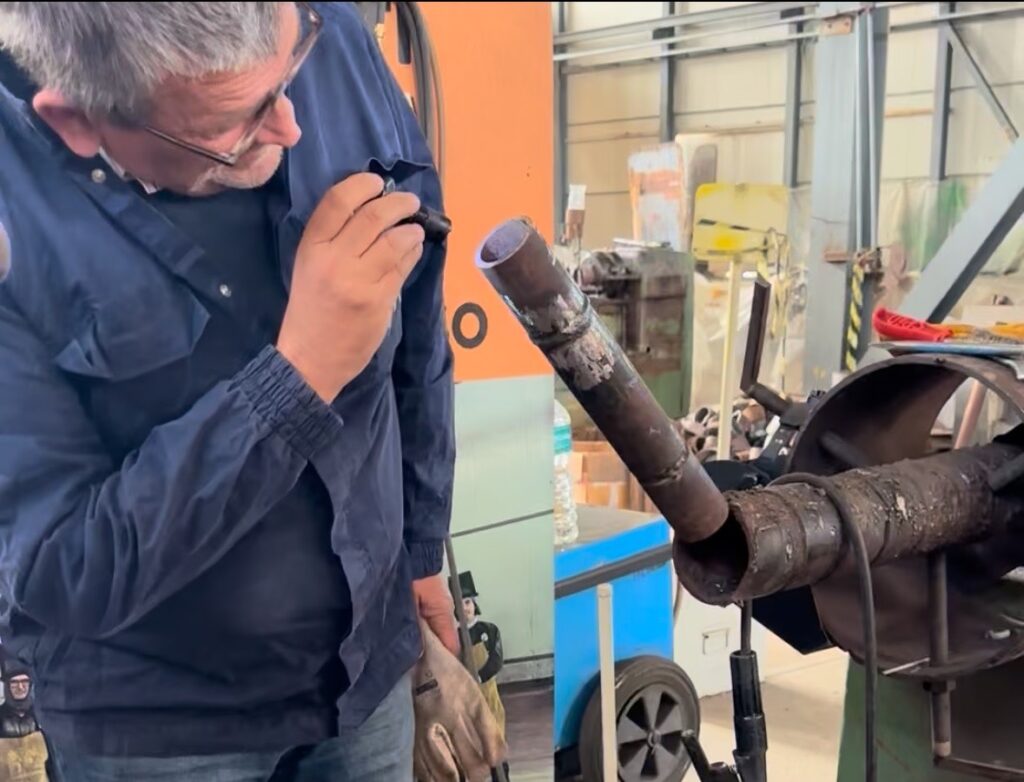
Come Ottenere un Patentino Internazionale di Saldatura

Quanto Costa?

Il costo varia in base a:

– Tipo di saldatura (TIG, MIG/MAG, ecc.)

– Standard richiesto (ISO, ASME, AWS)

– Numero di ore di formazione

Generalmente, un corso con certificazione internazionale può costare da 500 € a oltre 1.500 €.

Conclusion

Ottenere un patentino internazionale di saldatura è un investimento importante per qualsiasi saldatore professionista.

Con l’aumento della richiesta di standard di qualità elevati, avere una certificazione riconosciuta può fare la differenza tra una semplice mansione e una carriera ricca di opportunità.
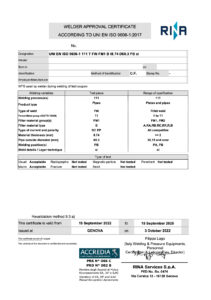
ITAFORMA only issues internationally valid Welding Certificates.

Ours are not mere certificates of attendance, but officially recognized Welding Certificates.

What is the difference between a CERTIFICATE OF ATTENDANCE and a WELDING CERTIFICATE?

There are many welding training courses in Italy, and there is often much confusion when seeking valid and clear information on welding courses, certificates, and qualifications.
Unfortunately, many aspiring welders do not know the difference between Certificates of Attendance, Certifications, and Welding Certificates, and they are not careful about the offerings of various Welding Schools.

That's why we have prepared a guide for future aspiring welders.

Let's start with the most important point: an aspiring welder should aim to be certified with a significant Welding Certificate that is valid and internationally recognized according to UNI EN ISO 9606.
The various Certificates of participation, attendance, or competence hold no recognized value for companies and European states.
Unfortunately, most metalworking and welding schools in Italy do not issue Welding Certificates, but merely certificates of attendance.

For metalworking companies across Europe, since 2014, it has been mandatory to employ qualified and certified welders holding UNI EN ISO 9606 Welding Certificates. This is because it is essential for companies to use only specialized and trained personnel for metalworking processes involving products that will come into contact with people.

These are, after all, rules that apply across all sectors: a doctor requires a medical degree, an engineer an engineering degree, and so on.

For aspiring welders seeking a welding course, it is crucial to demand from the school that a welding certificate be issued at the end of the training. This is because the welding certificate is the first thing companies request when hiring a welder, especially a junior welder with their first experience.

Yes, exactly. Companies evaluating a new “Junior” welder cannot assess them based on their resume, as they will not have demonstrable welding experience. Therefore, the first thing they ask is whether the candidate holds a Welding Certificate.

Why do companies or employment agencies ask candidates if they possess a Welding Certificate?

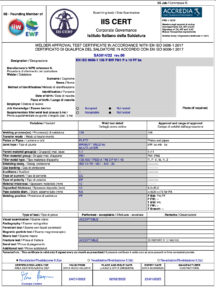
Because the Welding Certificate demonstrates and certifies that, at least once, the candidate has proven during an examination and in front of a recognized inspector that they can weld proficiently and without defects, and that the welded piece has been inspected externally visually and internally through destructive or radiographic testing, etc.

For these very reasons, it is crucial to demand from a Welding School adequate preparation to pass and obtain a Welding Certificate, rather than a useless Certificate of Attendance.

The Welding Certificate is not issued by the Welding School; the Welding School conducts the course and prepares you for the exam. It will then be an accredited Certification Body Accredia that issues the certificate through the School upon successful completion of the examination.

One should always ask schools if the course price includes the exam and welding certificate, or only a certificate of attendance.
One must also be wary of schools that tell you they will let you take the welding certificate exam after the course, but without a structured and adequate course, you might not pass it... and in the end, you will only have a certificate of attendance.

Therefore, it is essential to find a Welding School that takes responsibility, confident that its training program will enable you to pass the exam.

And what happens if you don't pass the exam?

A good Welding School, confident in having designed a course to ensure exam success, takes responsibility and allows you to retake the exam for free until you pass. However, very few schools in Italy offer this.

Fortunately, to pass the Welding Certificate exam, there are no recommendations; one must perform a genuine practical welding test in front of an Inspector from a Certification Body external to the School.

It can happen that a student is nervous during the exam and fails the test, but if they are well-prepared after a good welding course, they will almost certainly pass on the second attempt.

Another very important thing for a student to ask and evaluate is to know which Certification Body the School proposes for the issuance of the Welding Certificate.

It is essential that the certifying body is accredited by ACCREDIA, but it is also important that it is a well-known and recognized body by companies in the metalworking sector.

The most famous and recognized Welding Certification Bodies in Italy are:

  • Italian Institute of Welding (IIS)
  • RINA Spa (not to be confused with similar names)
  • Bureau Veritas
  • TUV

Therefore, we recommend only Schools that guarantee you obtain a welding certificate with one of these certification bodies, not because there aren't other accredited ones, but simply because, being the most recognized, metalworking companies immediately acknowledge the value of the certification when you present it.

Are all Welding Certificates the same?

No, the more challenging the examination test taken by the welder, the more significant the certificate, as the certificate specifies the examination test you have taken and passed.

To simplify, if you take a simple exam, we could define it as a basic beginner's certificate; if you take a complex exam, then it will be a significant and comprehensive certificate; for example, a highly respected certificate is for “in-service piping in 6G position with radiographed welding”.

In summary, to avoid wasting time, when requesting information, we advise you to:

  1. ask if the Welding Schools guarantee the issuance of the Welder's Certificate
  2. if the issuance of the certificate has an additional cost compared to the course price
  3. which Certification Body issues the certificate
  4. in which welding position it is issued to you.

The welding school ITAFORMA offers only professional welding courses, designed for employment, with the issuance of an internationally recognized Welding Certificate, in accordance with UNI EN 9606 standards.

Itaforma issues Certificates only from the best and most renowned Welding Certification Bodies: IIS, RINA, TUV, and Bureau Veritas.

At ITAFORMA, if a student, for any reason, does not pass the exam, they can retake it Free of charge as many times as necessary until they succeed.

ITAFORMA - Metalworking Welding Courses | RINA Welder Certification | ItaForma School | Welding Course ITAFORMA - Metalworking Welding Courses | Italian Welding Institute Certification | ItaForma School | Welding Course