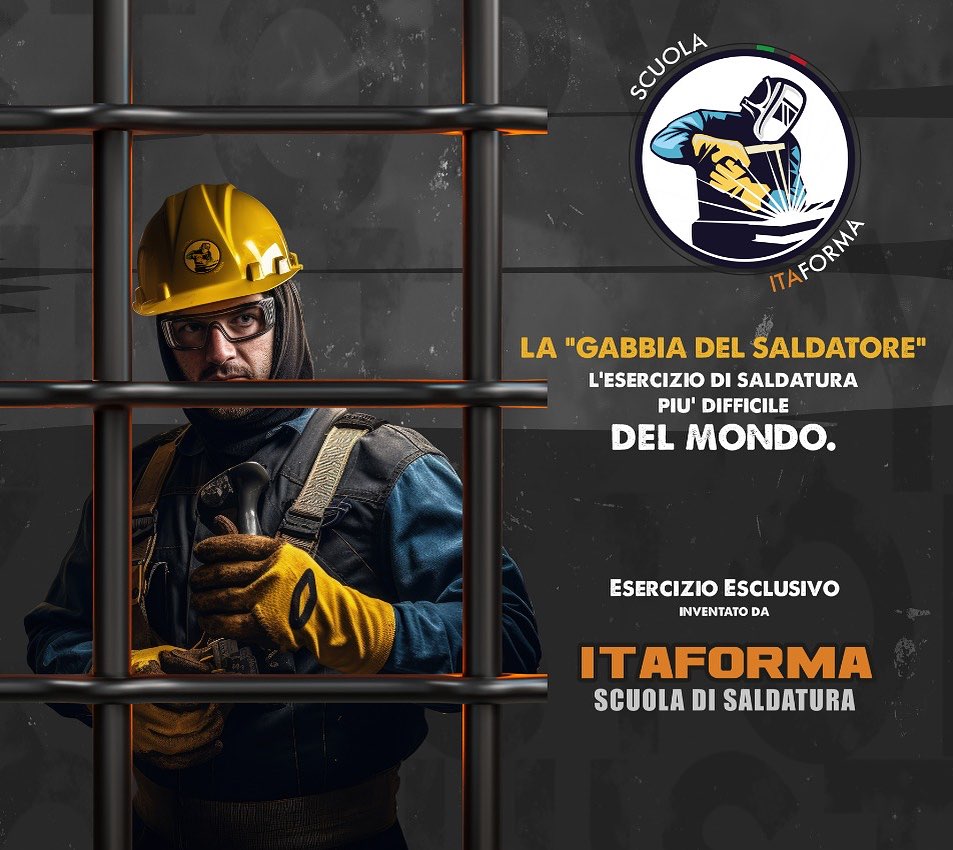
The “Welder’s Cage” – the most challenging welding exercise in the world, a true test for ITAFORMA training

To continue training Europe's best Junior Welders and maintain the highest global training standards, we have conceived and developed something extraordinary: the "Welder's Cage."

This welding exercise is the most difficult in the world, the most complex exercise ever invented and implemented by a Welding School.

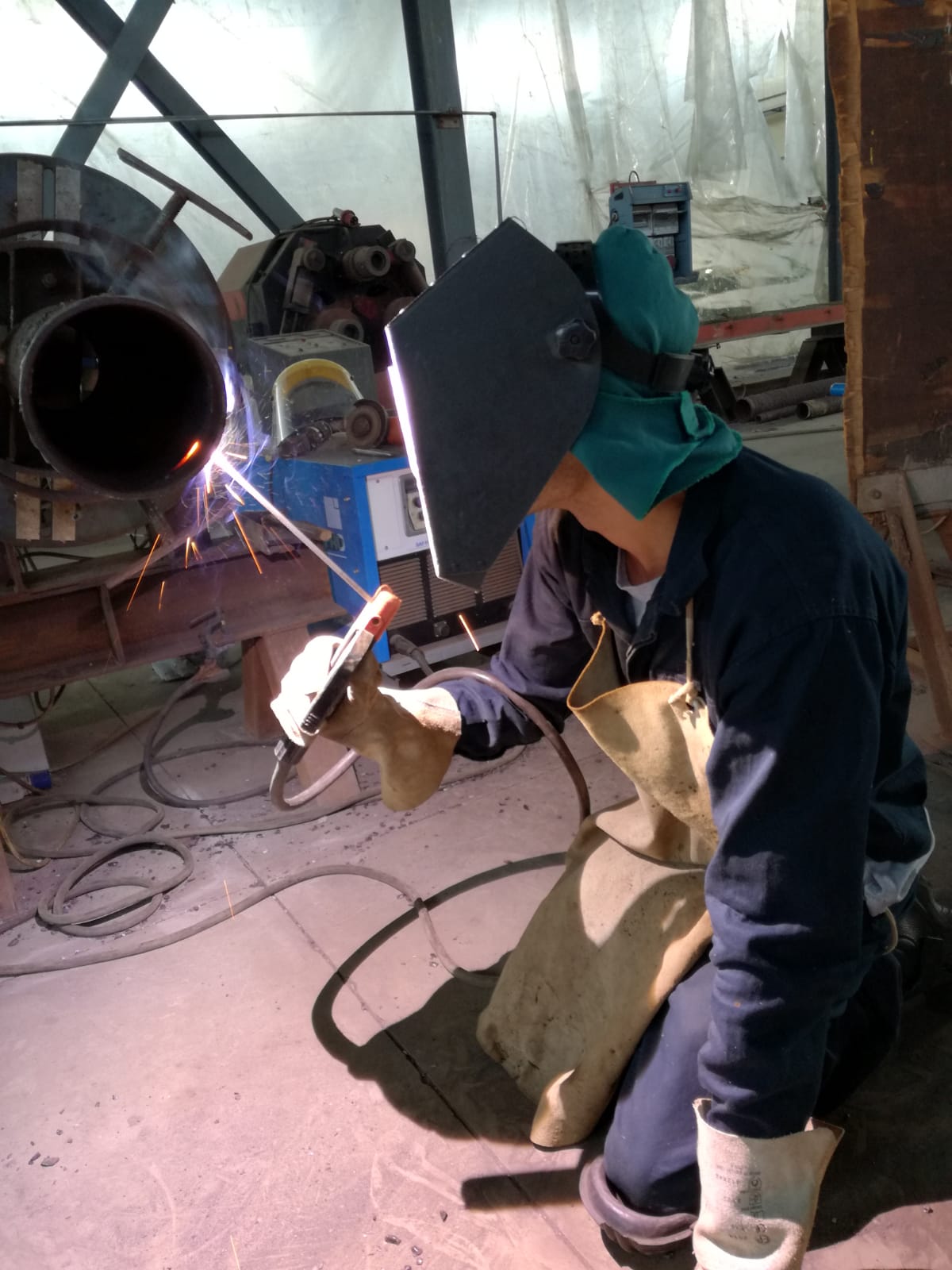
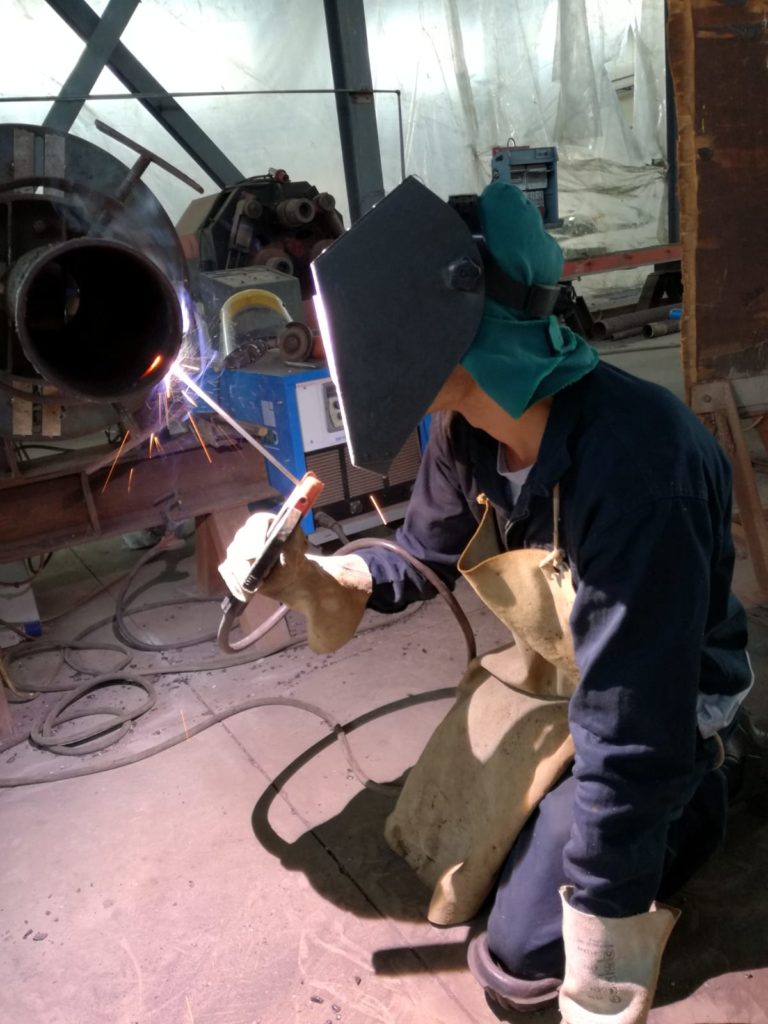
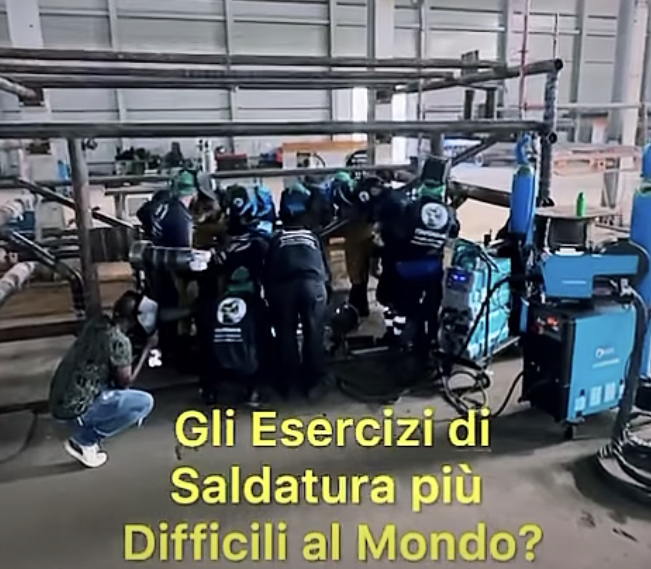
The “Welder’s Cage” is an intricate assembly of pipes, fittings, valves, flanges, and structural components, all meticulously positioned in a complex and hard-to-access manner. This exercise challenges and tests our welding students, pushing them to their limits.

The “Welder’s Cage” is substantial in size, approximately 5 meters long, 6 meters wide, and 3 meters high. It requires welders to perform welds in extremely challenging positions and angles, following specific procedures chosen for their training at ITAFORMA.
This training experience enables our students to achieve competency levelsthat are difficult to find elsewhere in Europe and worldwide.
ITAFORMA - Metalworking Welding Courses | Welder's Cage 3 e1697801616612 | ItaForma School | Welding Course

The inspiration behind the "ITAFORMA Welder's Cage" was to replicate the real-world conditions welders encounter in the field.

Every position within the Cage has been designed to be as uncomfortable as possible, compelling students to weld under difficult conditions ranging from: vertical to overhead, from a kneeling position to lying on the ground, from welding with the right hand to the left, with obstructions that limit visibility, making comfortable welding impossible. Finally, it is also possible to practice mirror welding.

The “Welder’s Cage”, an exclusive exercise invented by the ITAFORMA Welding School, represents a true in-situ welding installation.

The “ITAFORMA Welder’s Cage” will be available to all our future students who, in the final stages of their training, will have acquired the necessary experience to tackle this unique challenge.

Indeed, students will have the opportunity to test their skills and continue to improve until they become true welding experts within the Cage.

With the “Welder’s Cage”, ITAFORMA reaffirms its position as one of the leading and most important training schools in the metalworking sector, committed daily to preparing the welders of the future to overcome complex challenges with confidence, professionalism, and great mastery.
Through the ITAFORMA School, finding employment is easy.

96% of ITAFORMA Metalworking School students typically find employment within one month of completing our Professional Courses for Welders, Pipefitters, and Structural Steel Fabricators.

ITAFORMA boasts an exceptionally high employment rate!

Only a very few vocational schools across all sectors and universities in Italy achieve such a high immediate placement rate for their students.

Why do ITAFORMA students find employment so easily and quickly compared to many others?

This is attributable to several crucial factors that should not be underestimated:

1) Upon completing ITAFORMA training, students are among the best Junior Metalworkers available on the job market, making them highly sought after by metalworking companies.
Why do they become among the best Junior Metalworkers in Italy?
It's simple! They undertake the longest, most rigorous, and most intensive metalworking course available; this makes them exceptionally well-prepared and, consequently, highly sought after by companies seeking welders, structural steel fabricators, pipefitters, assemblers, and metalworkers in general.

2) Upon completing their metalworking training, students have access to crucial and unique Employment Support Services provided by ITAFORMA School.

That's right, ITAFORMA School has an internal office that acts as an intermediary between its students and industry companies, much like a Specialized Employment Agency.

The service is completely free of charge and connects ITAFORMA students seeking employment with metalworking companies looking for workers.

3) ITAFORMA School has established an extensive Metalworking Network, forming direct collaborations with over 800 Italian and international companies who contact us daily to book and reserve our students.

During the training period, having understood each student's requests and specific aptitudes, we connect each of them with various companies to arrange interviews, practical assessments, or job offers consistently aimed at employment.

What are ITAFORMA School's employment support services?

They are numerous and represent the strength and secret to the success of the School, its students, and ITAFORMA's partner companies.

▸ For our students, we prepare a Metalworker's CV in both Italian and English,

▸ We create Video Resumes for each student during practical training, to be sent to company production managers,

▸ We provide a contact list of at least 50 Companies actively seeking welders,

▸ We put them in direct contact with company managers,

▸ We arrange interviews and practical work assessments.

These are ONLY some of the Employment Services we provide, enabling our students to receive concrete job offers from across Italy.

And it doesn't end there... there's another percentage that concerns us and which we consider very important!

In fact, in the last year, ALL of our students (100%) who completed one of our Electrode Welder – TIG Welder – MIG/MAG Welder – Pipefitter – Metal Fabricator courses, and who had their own transportation and were willing to relocate if necessary, received at least 2 job offers from our partner companies.

We are proud of our work and strive to improve continuously, day after day, by meeting the needs of Students and Companies, constantly updating our training programs with cutting-edge technology and innovative work techniques most sought after by companies.

Answering the initial question: is it easy to find a job through ITAFORMA school? The answer is “absolutely YES!”

The job search, practical assessment, and start of employment for each of our students are very simple, fast, and immediate! See for yourself!

Learn more about our training courses for Welders – Industrial Pipefitters – Metal Fabricators – Mechanical Technical Drawing

Read our students' testimonials!

Watch ITAFORMA School's Videos

Continuous Wire Welder

WIRE WELDER

Wire Welding Course

Wire Welding

As anticipated at the close of the previous article, today I will discuss the MIG/MAG Wire Welding procedure “EN ISO 9606-1 136”  

Wire Welding is also known as semi-automatic continuous wire welding, as it is not solely a manual process but utilizes a generator connected to an external unit containing a 15 kg spool of filler wire. The wire spool (which replaces the electrode) can be solid wire or flux-cored wire. This welding process allows for continuous welding, providing the welder with significant autonomy.

The MIG MAG Continuous Wire Welding process utilizes a shielding gas mixture. The composition of the gas mixture depends on the materials to be welded, but carbon dioxide and argon gas are often used.

MIG MAG Continuous Wire Welding Process

The MIG/MAG wire process is certainly the most widespread in metalworking workshops worldwide, and its learning, in my opinion, is much simpler than other welding techniques.
New machines are equipped with an advanced onboard computer which, if properly configured, greatly simplifies welding, as the program allows for adjusting the weld based on the type of workpiece-joint to be welded.

MIG-MAG Continuous Wire Welder Certificate

The qualification process to obtain the Wire Welding Certificate is similar to what was already explained in the article on shielded metal arc welding. The joint-workpiece to be welded during the final exam is fixed in a vertical position and welded with full penetration and a back pass.

Our MIG-MAG Continuous Wire Welding Course

At our Welding School, the learning period for this welding process is approximately one intensive month of welding. With our certified teaching method, students weld for approximately 100 hours very intensively, and the success rate for passing the final exam is extremely high. Upon successful completion of the final exam, we will issue you an International Welding Certificate certified by the Italian Institute of Welding, an entity recognized by all Italian companies that hire welders.

For more information on our MIG MAG continuous wire welding course, click here to go to the dedicated page or call 3355985920.

In the next article, we will discuss Submerged Arc Welding.


Mimmo, Senior Welding Inspector

Electric Welder Course

Welding Courses Catania

Electrode Welder Course

Our Welding School's Electric Welder Course

Article Author: Mimmo, Senior Welding Inspector, Metalworking Specialist. 

The question most frequently asked by those interested in our courses is:

Which welding course should I choose?

At our welding school, we teach 4 types of welding:

1) Shielded Metal Arc Welding (SMAW) / Electric Welder,

2) Wire Welding (MIG/MAG),

3) TIG Welding (GTAW) / Argon Welder,

4) Submerged Arc Welding (SAW),

Today, I will discuss the first course, Electric Welder, also known as Electrode Welder Course (with code SMAW or n°111).

This type of welding is one of the most widespread globally and allows for welding almost all types of ferrous materials.

It is a welding process that occurs via an electric arc, leading to the fusion of a coated electrode and the ferrous material.

Due to its manual nature, the electrode welding process can be used interchangeably on-site in construction/plant environments and in workshops.

Electrode welding is the fundamental basis of all welding processes. Our welding course enables you to understand and teaches you how to weld a full penetration joint with back gouging.

For those unfamiliar with the industry, a joint is the connection area between two pieces that need to be welded. Joints can have various characteristics and shapes, but in all cases, they must be properly inspected and prepared before welding. However, don't worry; we will teach you everything during the course, as we always start from scratch.

The joint to be welded is then positioned and secured vertically on the workbench, subsequently welded for penetration, filling, and finishing, and then back-gouged from the opposite side.

If an error is detected during welding, it is corrected by creating a deep groove using an angle grinder of at least 3-4 mm, thereby removing the faulty weld section and re-welding with greater care. Typically, the root pass is where most defects and impurities of the weld pool are located.

The electrode welding certification requires a welding test/examination, followed by destructive testing of the specimen and radiography. Only upon successful completion of the test will our recognized International Certifying Body partner issue your welding certificate, which will be valid worldwide.

The electrode welding certificate is very comprehensive and certifies you to weld sheet metal from half the thickness of the test/specimen/examination up to double that thickness. Therefore, if you weld a 12 mm thick joint during the certification exam, you will be certified for thicknesses ranging from 6 to 24 mm. You will be certified to perform welds on all types of sheet metal of the aforementioned thickness in carbon steel, on profiles such as IPE, HEA, HEB, UPN, etc., and also on pipes or cylindrical bodies over 500 mm, extending indefinitely to include tanks, etc.

Obtaining this welding certificate is by no means simple or guaranteed; recommendations are not applicable. It will be demanding, requiring many hours of commitment and dedication throughout our course.

The electric welder is a highly sought-after skilled worker (electric welder) in the job market. However, today, many companies, depending on their sector, also require proficiency in TIG/Argon welding (a course I will explain in the next article).

My advice: If you live in an area with numerous companies requiring plant maintenance, specifically plant shutdowns or refinery turnarounds, electrode and TIG welding processes are undoubtedly the most utilized and thus highly demanded by companies. 

In the next article, I will discuss the TIG (argon) process, which is the most comprehensive of our courses.

For more information on our electrode welding course, click here to visit our website page.

Article Author: Mimmo,  Senior Welding Inspector, Metalworking Specialist.