Welder Salary: Why Get Certified in Your Own Name?
In the welding industry, pay levels depend on many factors: country of work, experience, and industrial sector… but most importantly, the certifications you hold.
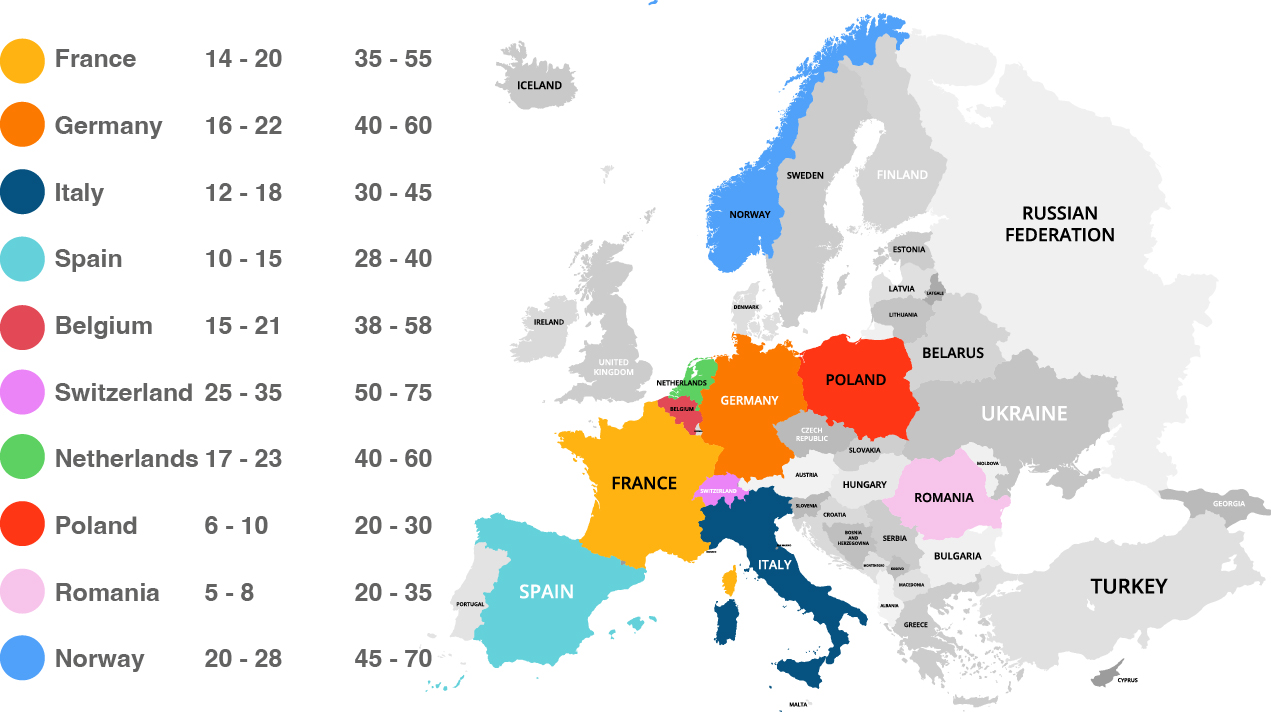
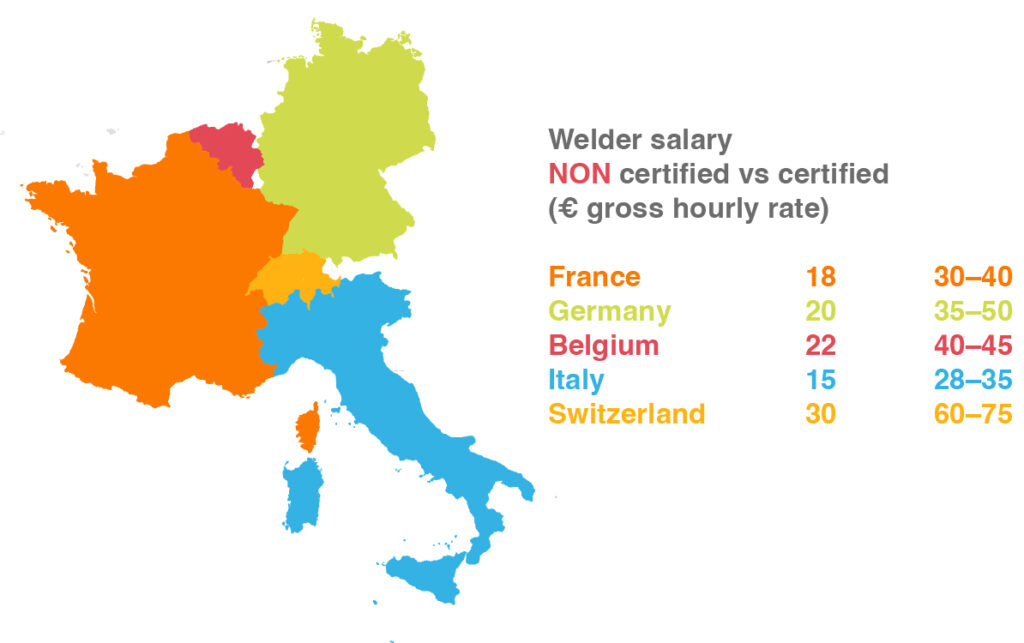
For example, a certified welder in Switzerland can earn up to €70 per hour, compared to €30 for a position without a specific certification. To maximize your welder salary, it’s crucial to consider how you obtain your qualifications: through a company or in your own name. This strategic decision can completely transform a career.
1. Welder Salary: The Direct Impact of Certifications
Certification isn’t just a bonus—it has become a legal requirement to work as a welder in most European countries.
Without a valid certification, you’re no longer authorized to work, whether as an employee or freelancer. Companies don’t hire uncertified welders, and once a certificate expires, renewal is mandatory—often at the worker’s expense.
Certifications have a major impact on your welder salary, especially for freelancers. In Europe, a certified welder can earn up to 60% more than a non-certified welder with the same skill level.
2. Welder Salary and European Country Differences
Welder salary varies significantly across European countries, often linked directly to the certifications held.
In markets like France, Italy, Switzerland, and Germany, valid certifications are always required, and applications without official proof of qualification are automatically rejected.
3. Getting Certified Through a Company: A Limited Advantage
Some companies offer in-house certification programs at their own cost. This can be a benefit—but with clear limitations:
– The certification is linked to the company: it’s registered in the employer’s name and may not be recognized if you leave.
– It may be limited to one specific welding process, reducing the welder’s versatility.
– Salary negotiations become harder: employees with internal certifications have fewer arguments when asking for a higher welder salary, and changing jobs becomes more difficult.
4. Getting Certified in Your Own Name: A Gateway to Freedom and Higher Pay
Obtaining your welding certification in your own name—outside of company training—is a real professional asset. It offers several key advantages:
– Portability: the certification is recognized across Europe, regardless of employer.
– Professional freedom: it allows you to apply for freelance jobs, international contracts, or subcontracted work.
– Better salary negotiation: a welder certified in their own name can use this to secure a higher welder salary, both when being hired and during career changes.
– Independence: for freelancers, it’s essential for working on industrial or public construction sites.
5. How Much Does a Welding Certification Cost?
Costs vary depending on the welding process and training center:
– TIG or MIG/MAG: €300 to €700 per certification
– Metal Arc Welding (SMAW): €400 to €800 depending on complexity
– Multi-process packages: up to €2,000 in accredited centers
These costs might seem high, but the return on investment is quick. For example, a self-certified welder in France can increase their hourly rate from €18 to €35 or more by going freelance or entering a high-tech industry.
A €700 investment could raise the welder salary by over €1,000 per month in some cases.
Each exam attempt costs money, so it’s best to take the exam at the same institution where you trained.
Itaforma is the only welding school that guarantees certification.
6. Welding Certification: A Tool for Salary Negotiation
Here are some real-world examples:
– In Belgium, a MIG/MAG welder certified in their own name can freelance for €45/hour, compared to €22/hour as a non-certified employee.
– In Switzerland, an independent ASME IX welder can earn €65–75/hour, compared to €30–35/hour without the certification.
– In Germany, personal certifications are now required to enter the automotive or chemical industries.
Welder salary is directly linked to the level and type of certification. Recruiters and agencies consistently value individual, verifiable qualifications listed on official certificates.
7. Choosing the Right Training to Get Certified
To get a reliable welding certification, it’s essential to choose a recognized training center accredited to European standards (such as ISO 9606). The best choice is intensive, practice-based training delivered by experienced instructors.
At Itaforma, certification programs are designed to:
– Prepare students for Europe-wide certification exams
– Provide practical welding skills with one-on-one coaching
– Represent students at exams as many times as needed until they pass
– Help graduates enter the job market through a network of partner companies
Getting certified in your own name through Itaforma gives you the tools to start or relaunch your career—with an optimized welder salary.
Invest in Certification to Invest in Your Salary
In a competitive market, the welder salary is far from fixed. It evolves with skills, countries, and—above all—the level of certification. Getting certified in your own name turns your qualification into a salary negotiation tool, opens international doors, and ensures career mobility.
Beyond employment status—freelancer or staff—it’s the autonomy of qualification that truly makes a difference.
Train smart. Certify smart. That’s the key to getting the most out of a welding career.
FAQ: Everything You Need to Know About Welder Salary
1) What’s the average salary for a certified welder in Europe?
It ranges from €30 to €75 gross per hour, depending on country and specialization.
2) Do certifications expire?
Yes, they usually need to be renewed every 2–3 years.
3) Can I take a certification exam as an individual?
Yes, and it’s highly recommended for negotiating your welder salary more freely.
4) Does Itaforma guarantee certification success?
Yes, students are supported until they pass, with unlimited exam attempts.
5) How long does it take to get certified?
Between 2 and 6 weeks, depending on the welding process and your starting level.